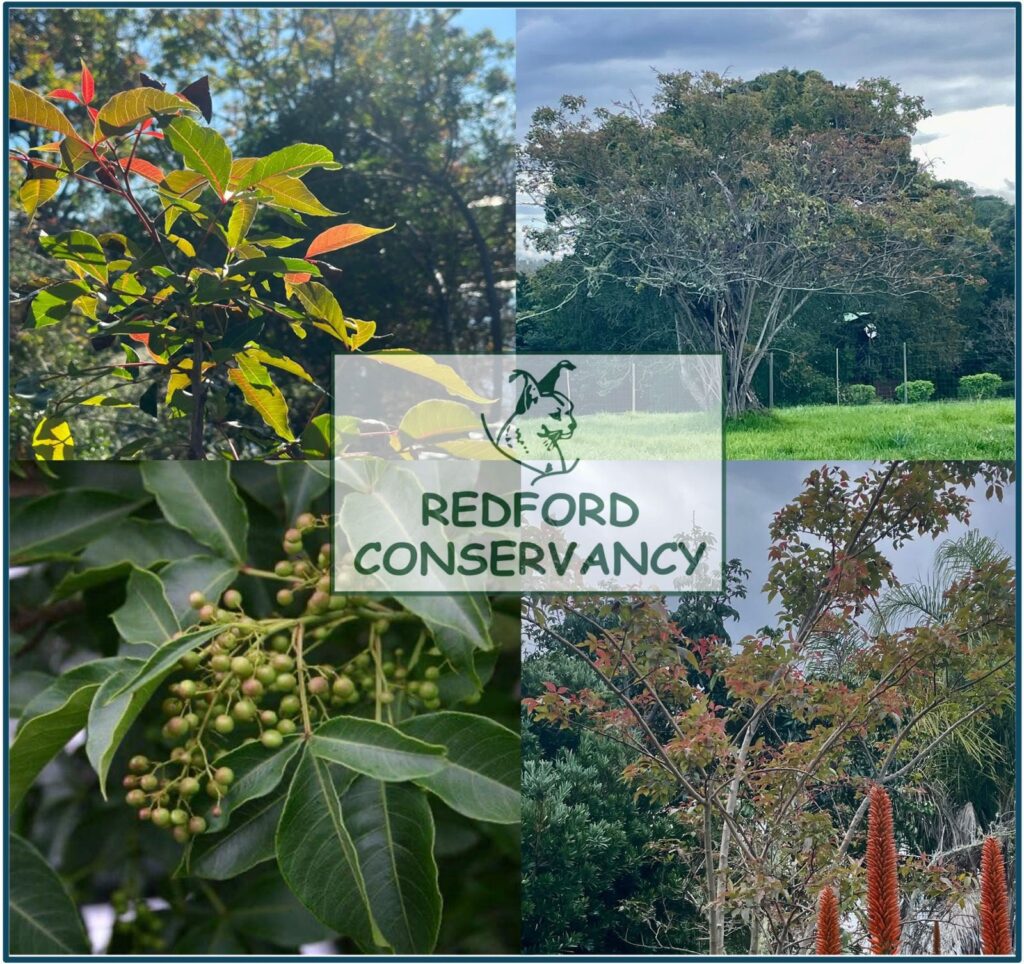
The red currant is one of the few indigenous trees that turn autumn colours and lose their leaves in winter, and right now it is beautiful in its red foliage. It starts flowering from August, and in summer its berries attract many birds (loeries, bulbuls, barbets, white-eyes) as well as bees and other insects.
It is an extremely fast-growing pioneer tree, which makes it ideal for replacing trees that fell in the storm and for reforesting disturbed areas. It also makes a wonderful windbreak. It’s a bit of a hidden gem, but once you start to notice it, you’ll appreciate it.
What it looks like
- Size: 6 to 10 m tall.
- Spines: young and coppicing branches may have spiny thorns, but mature trees are spineless.
- Leaves: in threes, large and glossy dark green, turning red in autumn.
- Flowers: small, yellowish-green, in clusters at the ends of the branches. Male and female flowers grow on separate trees, from August to March.
- Fruit: heavy clusters of round, shiny, dark reddish-brown berries. All indigenous Searsia species in South Africa have edible fruit rich in carbohydrates.
- Roots: not aggressive, so it can be planted closer to buildings.
Uses
- Traditional medicine: the sap is used for heart complaints; the bark to strengthen the body, stimulate circulation, and treat rheumatism and mental disorders. Bark extracts may help with convulsions and epilepsy.
- Timber: makes good, attractive furniture. Historically used for wagon wood, turning and small tools.
- Fodder: valuable browse for antelope in dry areas.
Growing tips
- Easily grown from fresh seed or cuttings.
- Grows in full sun or partial shade, tolerates moderate frost and is drought-hardy once established.
- Plant in well-drained, composted soil, and water young plants regularly.
- Prune from early on if you want a single-stemmed tree. Left unpruned, it grows into a large multi-stemmed shrub, which is great for screens and windbreaks.
Reference: African Legacy: Searsia chirindensis